
Loading...
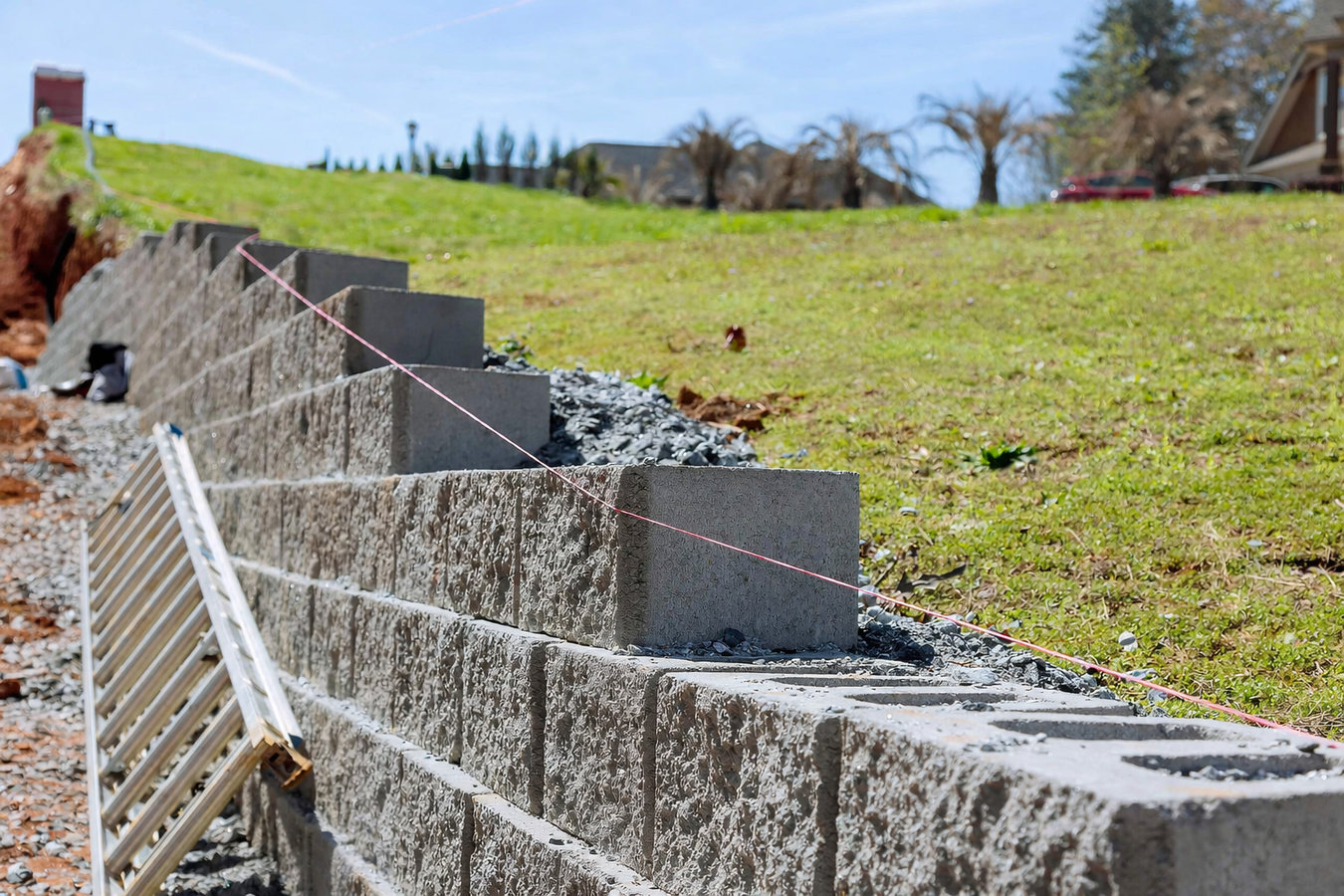
Slopes wash away, walls lean, and water ends up where it does not belong. Get a retaining wall built below frost depth with drainage engineered for Pueblo's clay soil and monsoon storms.
Retaining wall construction in Pueblo, CO means excavating a trench below the frost line, setting a compacted base, building the wall course by course with drainage material behind it, and backfilling to stabilize the slope. Most standard residential walls of 20 to 40 feet take two to four days of active construction, though permitting adds to the full timeline.
In Pueblo, two things separate a wall that lasts from one that leans within a few winters: how deep the foundation is set and whether drainage was built in behind the wall. Pueblo's clay soil holds moisture and puts lateral pressure on walls that most other soils do not. Without proper drainage, that pressure builds after every rain event until the wall starts to move.
Retaining walls often get built alongside other hardscape work. If your project involves a sloped driveway edge, our masonry restoration team can also address any existing masonry on the property while we have equipment on site. For slopes that need additional structural support, we also offer concrete block walls as a complement or alternative, depending on your layout.
If you notice bare patches, small channels carved by water, or soil collecting at the bottom of a slope after Pueblo's summer storms, your yard is actively eroding. Each rain event removes more material and brings the slope closer to failure. A retaining wall stops the erosion and gives the slope a permanent, stable edge.
A wall that now leans toward the downhill side is under more pressure than it can handle. In Pueblo's clay soil, this often happens after a wet spring when the ground swells and pushes outward. Horizontal cracks across the wall face are especially serious - they usually mean the wall is beginning to overturn.
If water collects against your house or garage after rain, the slope above it is directing runoff toward your structure. Over time, that standing water can damage your foundation or cause basement moisture problems. A properly graded retaining wall with drainage built in redirects that water safely away.
If part of your yard is so steep that mowing it feels dangerous, or you cannot use that area for anything practical, a retaining wall with level terracing behind it can reclaim that space. Many Pueblo homeowners on the city's hillier west side have transformed unusable slopes into flat garden beds or usable outdoor areas.
We build new retaining walls from scratch on properties where slopes are eroding, water is pooling, or homeowners want to level out usable yard space. We also replace existing walls that are leaning, cracking, or were originally built without adequate drainage. For taller slopes, we design tiered systems - stepping the wall in levels rather than building a single tall wall, which is both structurally stronger and visually cleaner.
All our wall projects include the drainage system behind the wall - gravel and a perforated pipe that routes water away before it can build up pressure. For properties near the Arkansas River corridor or on Pueblo's hillier west side, where monsoon storm runoff volume is higher, we size that drainage accordingly. If your project also includes other masonry work on the property, we can coordinate with our masonry restoration team, and for freestanding structural walls we also offer concrete block walls as a stand-alone or combined service.
Ideal for slopes with active erosion, water pooling problems, or land you want to level and use.
Best when an existing wall is leaning, cracking, or was originally built without proper drainage.
A good fit for taller slopes where stepping the wall in levels is safer and more attractive than one tall wall.
For properties near the Arkansas River corridor or on Pueblo's west side where storm runoff volume is a concern.
Pueblo averages only about 12 inches of rain per year, but summer monsoon storms can drop a significant amount in a very short time. That sudden surge of water behind a slope - particularly on properties in the city's west side or near the Arkansas River corridor - can overwhelm a wall that was not designed for high-volume drainage. We size drainage systems for Pueblo's storm pattern, not just average annual rainfall. In Pueblo West, where newer subdivisions sit on slopes with varying soil depth, proper wall engineering is especially important for protecting foundations and finished landscaping.
Pueblo's clay-heavy soils compound the drainage challenge. Clay swells when wet and shrinks when dry, which puts more lateral pressure on walls than sandier soils do. In older Pueblo neighborhoods like Bessemer and the Eastside, underground utility lines may also not be mapped precisely, which is why we call Colorado 811 before every excavation job - it is required by law, and in older parts of the city it matters more than in newer subdivisions.
The Colorado State University Extension publishes soil and landscape resources that help explain why wall design in Pueblo requires a different approach than in much of the country. The National Concrete Masonry Association also sets the industry standard for concrete block wall construction that we follow on every project.
We visit in person to see the slope, assess soil conditions, and take measurements. No honest contractor can price a retaining wall from photos alone. You will hear back within one business day to schedule.
We handle the City of Pueblo permit application and call Colorado 811 to have underground lines marked before any digging begins. Both steps are required by law and are included in our scope, not billed as extras.
The crew digs the base trench below Pueblo's 36-inch frost line, compacts the base, and sets the first course level and plumb. This phase determines the long-term stability of the wall.
The wall goes up course by course with drainage gravel and a perforated pipe installed behind it throughout. After the wall is complete, we backfill, grade the soil, and handle the city inspection. The wall can be landscaped immediately.
Free written estimate. Permits handled. Utility locating included.
(719) 750-0092Pueblo's ground freezes to roughly 36 inches in a typical winter. We set every wall below that depth so freeze-thaw cycles have nothing to push against. A wall that starts to lean within a few winters almost always had a shallow foundation.
Pueblo's high-clay soil holds moisture and puts extra lateral pressure on walls. We include a gravel layer and perforated drain pipe behind every wall so water does not build up and push outward after Pueblo's summer monsoon storms.
We pull all required City of Pueblo building permits and coordinate the inspection. A wall built without a permit is a liability when you sell your home - and a contractor who suggests skipping permits is one to walk away from.
Before any excavation, we call Colorado 811 to have underground lines marked at no cost to you. In older Pueblo neighborhoods like Bessemer and the Eastside, underground infrastructure may not be precisely mapped, making this step more important, not less.
The proof is in the work years later - a wall that still sits plumb and level after several Pueblo winters, with no leaning, cracking, or soil moving where it should not be. That is the outcome we build toward on every project.
Restore the appearance and structural integrity of aging brick, block, or stone masonry on your property.
Learn MoreBuild freestanding concrete block walls for property division, privacy, or structural support.
Learn MorePueblo's monsoon season does not wait - reach out now to get your slope stabilized before the next storm hits.